
Short Courses
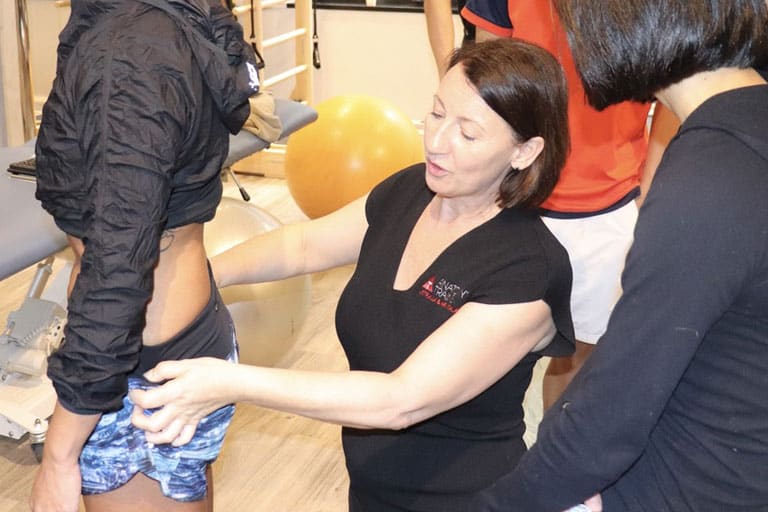


This course sheds light on the pelvis – the keystone of human architecture – by organising the 20 or so muscles of the pelvis into three fans. As well as giving you strategies and techniques to balance these Fans of the Hip.
The hip and pelvis combine to transfer the forces from two legs into the one spine, and therefore have a hugely complex role to fulfil in the body. Ida Rolf described the pelvis as ‘the joint that determines symmetry’ and it is easy to see why.
Differences between the hips can affect down into the legs or up through the spine. Achieving balance here can be essential for long lasting results in any therapy.
NEXT COURSE DATES:
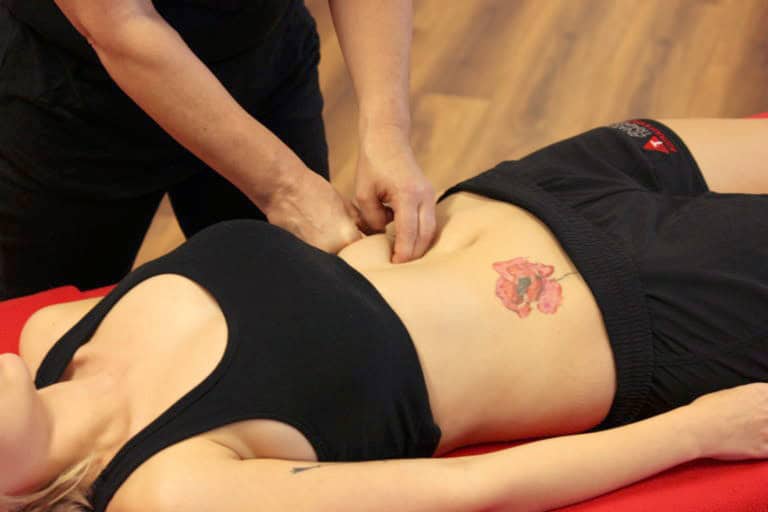
This is the third workshop in the Structural Essentials series. We have looked at arch balance and pelvis balance and now turn our attention to balancing the ribcage above with the aim of aligning the pelvic and respiratory diaphragms.
Achieving a balanced reciprocity between these two structures is essential to what is now termed ‘core support’ and long-term human biomechanical and respiratory health.
NEXT COURSE DATES:

This course examines the spine as a tensegrity truss – how the bones float within the myofascial balance. An integral part of structure, we all know the agonizing effects of incorrect mechanics when it doesn’t work and often fail to appreciate the wonderfully adaptive job it does when the vertebrae are allowed to float.
We look at the actions available at each of the sections (lumbar, thorax and cervical) of the spine and how they may lead to certain dysfunctional patterns. By putting the spine into context with the surrounding structures we can better understand the reasons for its limitations and its wondrous abilities.
NEXT COURSE DATES:
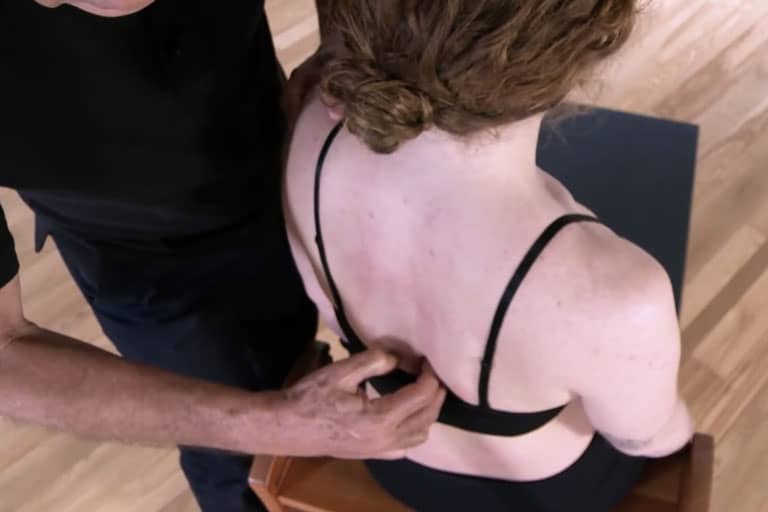
We are going to look at the balance of the shoulder girdle on top of the rib cage. – understanding the anatomy of the shoulder girdle and arms through the Anatomy Trains Arm lines.
In this computer age, the arms get unique usage these days, requiring a complex equation of stability versus mobility to balance correctly on the rib cage, the shoulders can easily be used to compensate for thoracic and cervical deviations or be the cause for them.
This can lead to issues travelling down into the arms and hands, up into the neck and jaw or even into the spine and rib cage. You will learn to recognise ‘ideal’ and compensated patterns and how to tie them into the story of the rest of the body. This will allow you to see what work needs to be done to create lasting results for this area.
NEXT COURSE DATES:
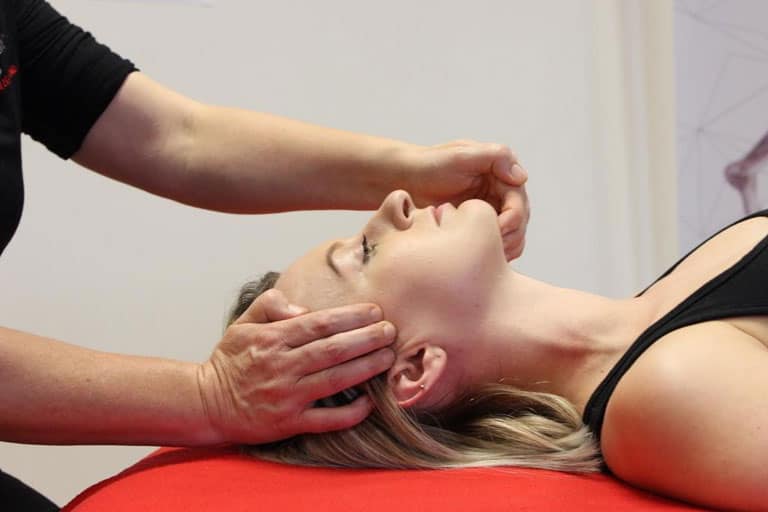
The neck is a remarkable feat of biomechanical engineering, giving a combination of wide range of movement but maintaining a structural strength. It is often seen as the last site of compensation as it corrects for any alteration from below allowing the eyes and ears to orient to the horizon.
Patterns can of course work their way in the other direction and particularly from the jaw and its many possible patterns of movement and holding.
This course will focus on key areas of the neck and jaw complex to allow you to build successful strategies to ease these potential problem areas alleviating the issues working in both directions and setting the body up for a longer lasting change.
NEXT COURSE DATES:
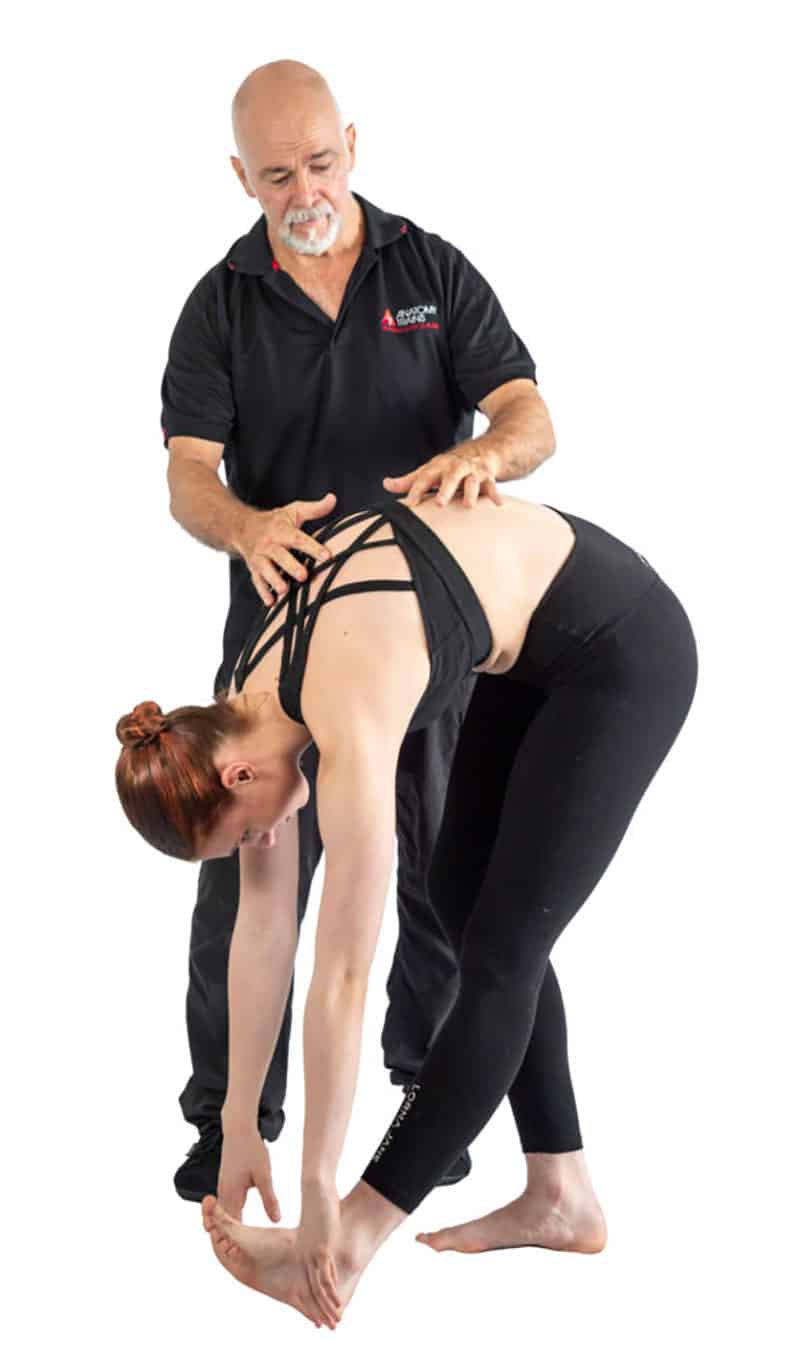
Anatomy Trains for Performance is the latest Anatomy Trains course to be developed using Tom Myers’ myofascial meridians. Anatomy Trains for Performance (ATP) has been developed and authored by Certified Anatomy Trains Teacher Chris Clayton, who has been involved in fitness, coaching and human performance for over 40 years.
NEXT COURSE DATES:

Understanding skeletal relationships within the body is the first step in helping our clients unwind movement and postural patterns that are causing pain, dysfunction and keeping them from optimal movement.
“Touch is seeing up close” being able to accurately palpate bones to determine relationships is key in our ability to accurately describe those relationships.
This course, led by Director of Anatomy Trains Australia & New Zealand Julie Hammond, offers a systematic, interactive approach to mastering the essential skills of Body Reading and Gait Assessment.
NEXT COURSE DATES:
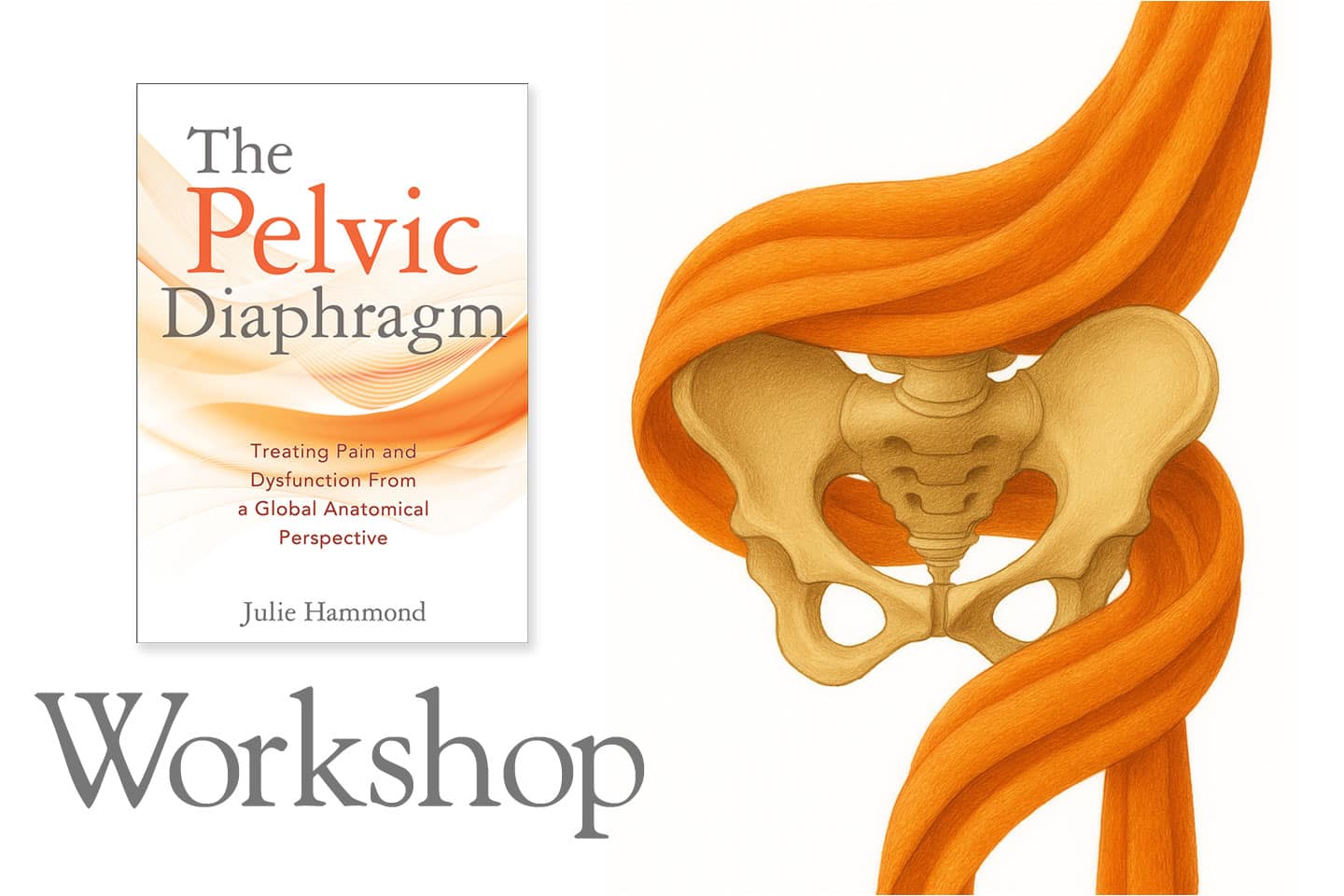
The Pelvic Diaphragm Workshop is based on Julie Hammonds’ book, The Pelvic Diaphragm: Treating Pain and Dysfunction from a Global Anatomical Perspective.
In this two-day workshop, we will take a deep dive into the intricate and complex local anatomy of both the male and female pelvis and pelvic diaphragm from the perineum to the fascial diaphragm of the endopelvic fascia.

Approved by Pilates Association Australia (PAA) for 10 PDPs.

A Massage & Myotherapy Australia Endorsed Education Activity for 16 CPE points.
NEXT COURSE DATES:
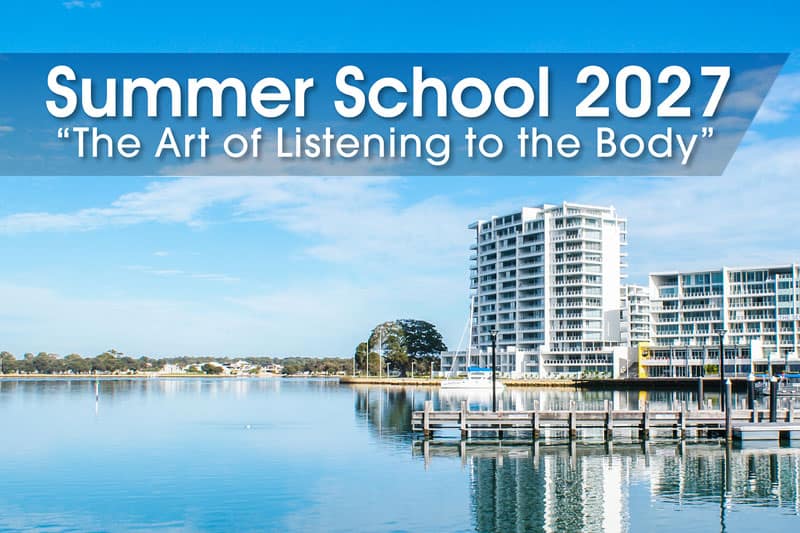
SUMMER SCHOOL SESSION DATES:
16 February: Closed Chain Biomechanics with GARY WARD
17-18 February: The Flow Motion Model with GARY WARD
16-19 February: Bone Work with WOJTEK CACKOWSKI
20-22 February: Introduction to Zoga Movement with WOJTEK CACKOWSKI
20-22 February: Navigating and Nourishing the Nervous System: A Polyvagal Perspective with MELANIE BURNS
23 February: ATSI Graduation Day
24-26 February: When the Body Speaks: Reading Patterns for Fascial Resilience and Autonomic Balance with THOMAS MYERS
27 February – 1 March: Spinal Dynamics: Advanced Soft-Tissue Approaches to 3-D Spinal Movement with THOMAS MYERS
2 March: Going Deeper: Advanced Mentoring for Structural Integration Practitioners with LOU BENSON
3-4 March: The Pelvic Diaphragm Workshop with JULIE HAMMOND
MANDURAH, WA
Seashells Mandurah
16 Dolphin Drive, Mandurah.
Western Australia 6210
2027 Summer School
The Sebel Mandurah
1 Marco Polo Drive, Mandurah.
Western Australia 6210
FORRESTFIELD, WA
Human Garage Fitness
369 Holmes Road
Western Australia 6210
CAMPERDOWN, SYDNEY, NSW
Sancta Sophia
8 Missenden Road
Camperdown NSW 2050
LILYFIELD, SYDNEY, NSW
Innerwest Crossfit
53a Justin Street
Lilyfield NSW 2040
LAI CHI KOK, HONG KONG
Leaper Sports Lab
Lai Chi Kok, Kowloon
Hong Kong
CENTRAL, HONG KONG
15/F Lee Kum Kee Central
54-58 Des Voeux Road
Central, Hong Kong
TAIWAN
Somategrity Academy
6F, No.20 Hengyang Road
Zhongzheng Dist
OSLO, NORWAY
Bergen Body Work
Oslo Norway