
“Pelvic pain and dysfunction are multifaceted problems affecting both men and women and their quality of life.
Pelvic diaphragm dysfunction is considered an isolated event, and it isn’t. A pelvis problem is never just a pelvis problem, and many other factors go with it.”
JULIE HAMMOND
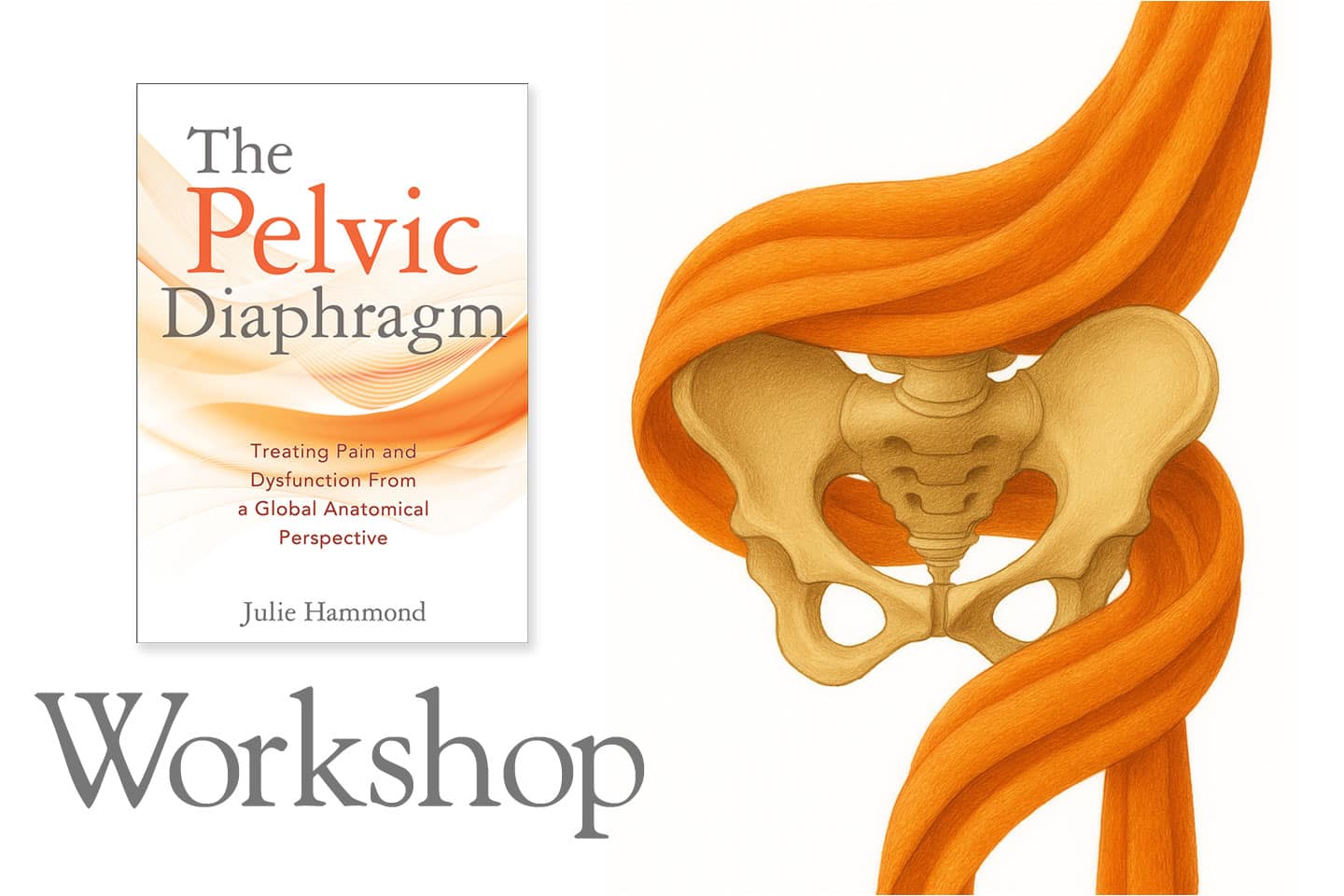
The Pelvic Diaphragm Workshop is based on the book, The Pelvic Diaphragm: Treating Pain and Dysfunction from a Global Anatomical Perspective by Julie Hammond.
In this two-day workshop, we will take a deep dive into the intricate and complex local anatomy of both the male and female pelvis and pelvic diaphragm from the perineum to the fascial diaphragm of the endopelvic fascia.
Once the local anatomy is understood, it is vital to appreciate how it fits into a global context. The pelvis is balanced within a larger global tensegrity structure. There are fascial and functional connections between the pelvic diaphragm and the respiratory diaphragm, as well as a functional relationship with the feet and ankles.
There is a clear link between the ankle and pelvic positions, which affects the pelvic diaphragm within.
The workshop will incorporate the latest research on these connections and their relevance to clinical practice. Making sure the pelvis has adequate support above and below before easing tension in the pelvic diaphragm, so the client can maintain the changes.
The aim is to inspire and excite students by making misunderstood, complex anatomy relatable. The focus is on the fascial connections between the pelvic diaphragm and respiratory diaphragm, introducing newer anatomical concepts. This is supported by current research that can inform clinical practice.
Clear guidelines are provided, including fascial release techniques, self-release (client homework), and experiential activities.
“There is a clear link between the ankle and pelvic positions, which affects the pelvic diaphragm within.”
JULIE HAMMOND
Who is this Workshop for?
Who is this Workshop for?
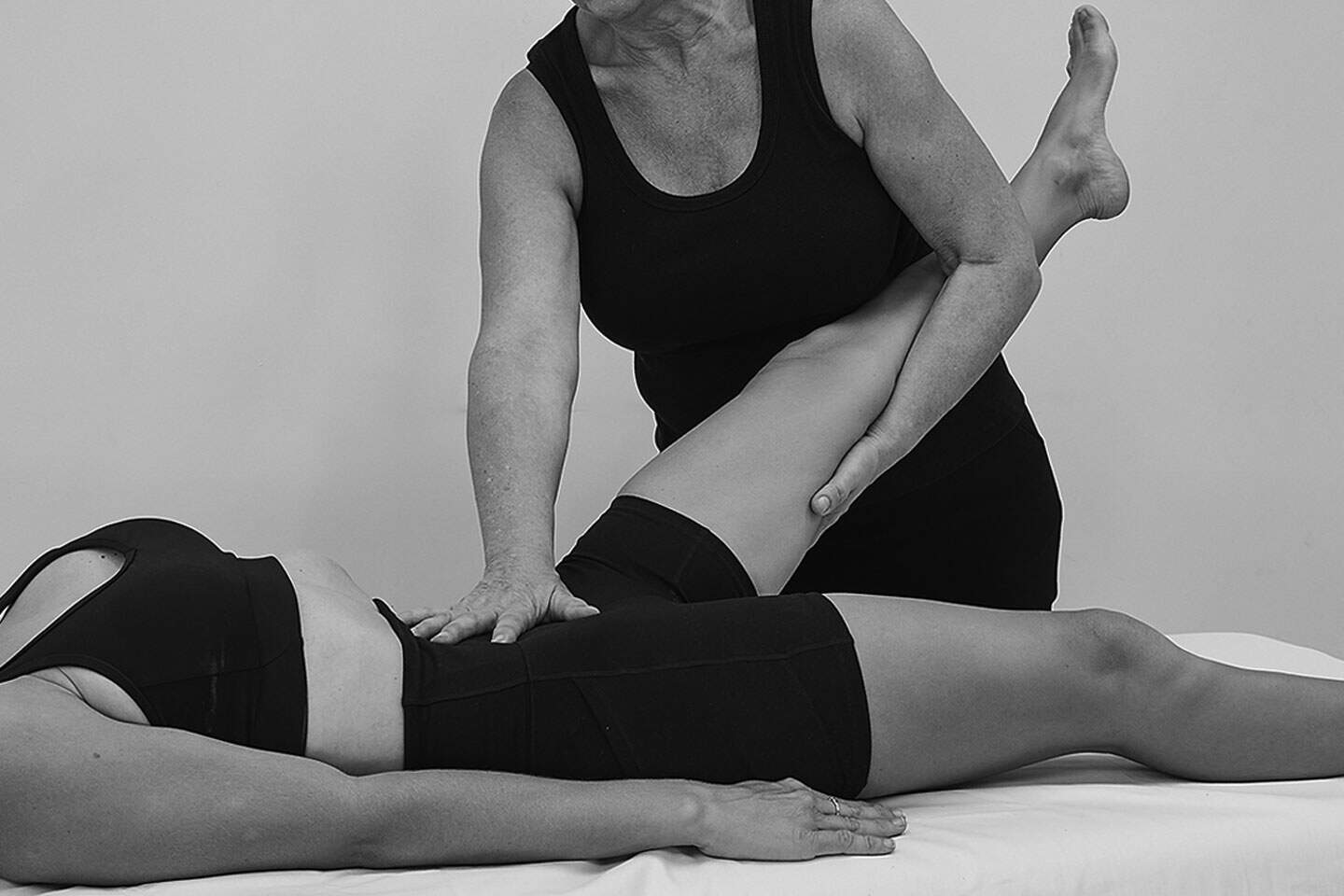
This workshop is a blend of theory, manual techniques, experiential and self-release techniques with myofascial balls.
It is ideal for manual therapists and movement practitioners who teach one to one or small groups, who are looking to deepen their pelvis anatomy knowledge and understanding of global connections, encouraging practitioners to zoom out and think outside the box.
BOOK REVIEW
An illuminating anatomical journey

Book Review by Helen Fletcher, Pilates Association Australia
Author Julie Hammond’s aim for The Pelvic Diaphragm was to “inspire and excite the reader about anatomy that is often misunderstood, making complex anatomy relatable”.
In this well designed and illuminating book, the reader is taken on an anatomical journey. Beginning with the author’s ‘why’, we then take a brief look at body reading and its terms, directions on how to use the book, and equipment needed for what the author refers to as experientials.
In chapter two, ‘The Fascial Origami’, we take a deep dive into this new anatomy, the fascial system, in all its interconnected wonder. From this chapter into the next, we can begin to not only see the bony pelvis itself as the central point of the body, the starting point for postural assessment, but to see the influence on the pelvis of the interconnected fascial system. How the pelvis and pelvic diaphragm are balanced within the structure and tensegrity of the body, and how this balance affects function and pelvic health.
From here, the author takes us into chapters on ‘The Pelvic Diaphragm’, ‘Connections from Below -The Feet and Legs’, ‘Respiratory Diaphragm’, ‘The Thoracolumbar Fascia’, and ‘The Floor of the Mouth, Larynx and Jaw’.
These chapters are comprehensive and rich in information that includes common postural patterns, key takeaways, and treatment aims for movement and manual therapists. Along with the experientials for you, the reader to practice and then introduce to your clients, there are also manual techniques for manual therapists to practice, experience, and then introduce to their clients.
It is at the conclusion of these chapters that the exploration of the global anatomical perspective is complete, and as readers we are now fully aware – and I challenge you to not have a sense of awe at the many influences on the health and function of the pelvic diaphragm.
The last two chapters bring the theoretical and anatomical information into entire chapters of practical application, with a focus on technique, cautions and contraindications.
The first of these two is dedicated to Self-Myofascial-Release contributed by Fiona Palmer, Movement Therapist, bodyworker and Anatomy Trains Educator.
Followed by Treating Pelvic Dysfunction with a Global Lens through Pilates: Stacking Up the Diaphragms, with Sharon Michau, a third generation Classical Pilates Instructor.
It is in these two chapters that we movement educators and teachers can begin to really explore the theory within the context of movement, through self-practice and personal exploration, or directly into practical application with our clients.
The technical language in this book is at times dense, and may challenge some readers, but The Pelvic Diaphragm is bursting with experientials throughout which can transport you from deep anatomical text into a movement and felt experience, something that I believe will resonate very well with movement teachers and educators and will certainly help to fulfil the author’s wish to make complex anatomy relatable.
Armed with the knowledge in this book, movement educators and manual therapists and all forms of physical therapists will be very well equipped to educate, inform and inspire their clients.
This book would be an invaluable addition to the professional libraries of Physiotherapists, Osteopaths, Pilates and movement therapists, manual therapists, personal trainers, and students of anatomy and the fascial system.
Author Julie Hammond has achieved her goal to “inspire and excite the reader about anatomy that is often misunderstood” as she opens our eyes and minds to the incredible interconnectedness of the body, enabling the reader to explore outcomes made possible by this deeper knowledge and understanding of the Pelvic Diaphragm and its important role in both function and form.
About Julie Hammond BSc(Hum&MedSc)
Julie Hammond is the Director and Lead Teacher of Anatomy Trains Australia & New Zealand, where she is dedicated to delivering high-quality education that is clinically relevant, evidence-informed, and grounded in real-world practice.
She teaches internationally and is passionate about mentoring practitioners to think critically, refine their touch, and develop lasting clinical confidence.
She is the author of The Pelvic Diaphragm: Treating Pain and Dysfunction from a Global Anatomical Perspective and contributed the chapter on Anatomy Trains Structural Integration to Fascia, Function, and Medical Applications by David Lesondak. Julie has a particular passion for women’s health and the role of fascia in pain, movement, and function.
A lifelong student of anatomy, Julie has participated in multiple fresh-tissue human dissections, believing that a deep understanding of anatomy is fundamental to exceptional clinical practice. She recently completed a Bachelor of Human and Medical Science, reflecting her commitment to lifelong learning and bridging the gap between science and practice.
Julie believes the strongest clinicians are those who integrate current research with hands-on experience. Equally, she believes clinical practice should help shape future research by asking meaningful questions that arise from treating real people. This philosophy underpins both her teaching and her clinical work, ensuring they remain current, relevant, and focused on achieving the best outcomes for patients.