ATSI PART ONE
Structural Essentials
Structural Essentials is the beginning of your ATSI Structural Integration journey. It is a mixture of manual techniques, theory and body reading.

Join us for the ATSI Part One Structural Essentials Intensive held 14 – 25 July 2026 with Chris Clayton.
You may take all 6 modules in a continuous format, or simply pick the workshop(s) of your choice.
14 – 16 July: Arches & Legs
17 – 18 July: Fans of the Hip
19 – 20 July: Opening the Breath
21 July: Tensegrity Spine
22 – 23 July: Shoulders & Arms
24 – 25 July: Head, Neck & Jaw
MANDURAH, WESTERN AUSTRALIA
Seashells Mandurah (Ward Room)
16 Dolphin Drive, Mandurah. WA 6210
Price: $4,675 AUD
($500 non-refundable deposit)
Enquiries: [email protected]
Part One of the ATSI Program consists of 6 Structural Essentials which can be taken as individual workshops spread over 6 months, or as an intensive program delivered in 13 days.
You must take all 6 modules to be able to carry on through the complete Structural Integration training. The modules are best absorbed in the order suggested below, but can be taken in any order.
While these modules are part of the ATSI training, they can also be taken as stand alone modules if you want to further your anatomy knowledge and gain new techniques.
The 6 Structural Essentials modules are a set of intensive soft-tissue technique courses.
Divided into functional regions, each module thoroughly conveys 15 to 20 technique ‘templates’ designed for versatile application for the different patterns your clients bring to you.
Each class includes:
- Relevant anatomy for the area – short intensive and integrated presentations assemble the best figures from multiple sources, including brand new learning tools such as video of fascial dissections and palpation of the relevant structures to convey the information in an inspiring and understandable fashion.
- BodyReading (visual assessment) – the common postural and movement implications – how to see and ‘read’ them in the intricacy of individual patterns
- Fascial Release Techniques – each technique is fully laid out for intent and ‘feel’, with plenty of time for practice, ensuring that you can apply these methods immediately in your practice.

Arches & Legs
We analyse the bones of the feet and how they conspire to help or hinder the arches and create strategies to help maintain better mechanics by dealing with myofascial restrictions and imbalances.
Fans of the Hip
This course sheds light on the pelvis – the keystone of human architecture – by organising the 20 or so muscles of the pelvis into three fans. As well as giving you strategies and techniques to balance these Fans of the Hip.
The hip and pelvis combine to transfer the forces from two legs into the one spine, and therefore have a hugely complex role to fulfil in the body. Ida Rolf described the pelvis as ‘the joint that determines symmetry’ and it is easy to see why. Differences between the hips can affect down into the legs or up through the spine. Achieving balance here can be essential for long lasting results in any therapy.
Opening the Breath
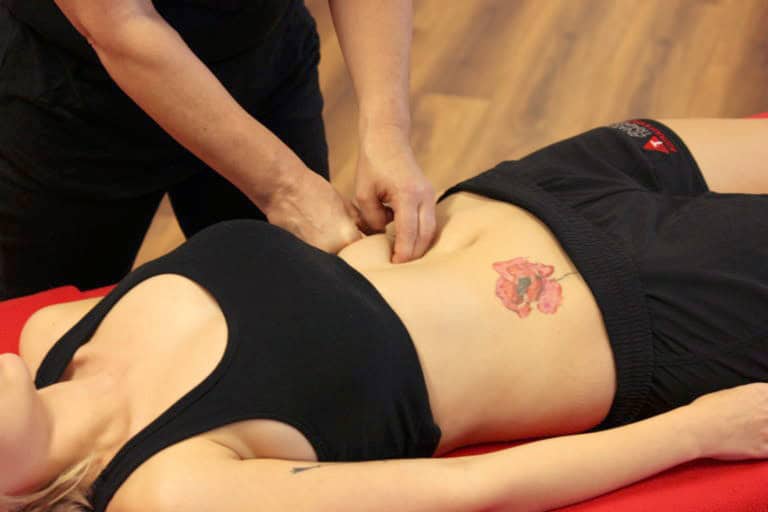
This is the third workshop in the Structural Essentials series. We have looked at arch balance and pelvis balance and now turn our attention to balancing the ribcage above with the aim of aligning the pelvic and respiratory diaphragms.
Achieving a balanced reciprocity between these two structures is essential to what is now termed ‘core support’ and long-term human biomechanical and respiratory health.

Tensegrity Spine
This course examines the spine as a tensegrity truss – how the bones float within the myofascial balance. An integral part of structure, we all know the agonizing effects of incorrect mechanics when it doesn’t work and often fail to appreciate the wonderfully adaptive job it does when the vertebrae are allowed to float.
We look at the actions available at each of the sections (lumbar, thorax and cervical) of the spine and how they may lead to certain dysfunctional patterns. By putting the spine into context with the surrounding structures we can better understand the reasons for its limitations and its wondrous abilities.
Shoulders & Arms
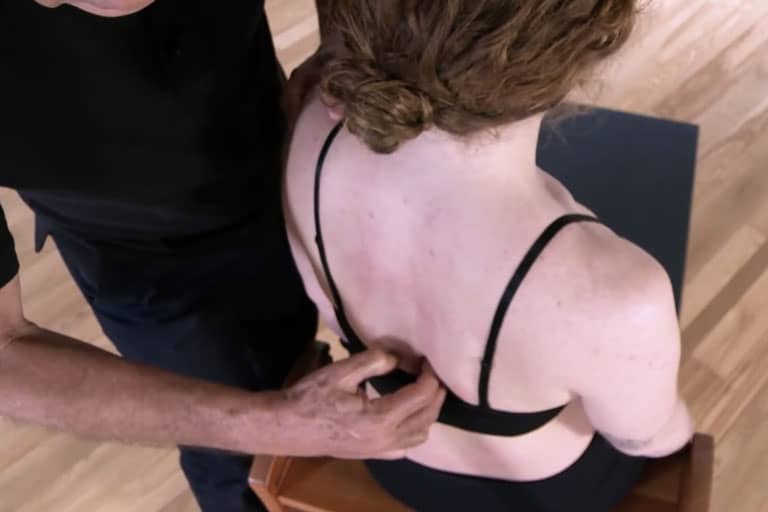
We are going to look at the balance of the shoulder girdle on top of the rib cage. – understanding the anatomy of the shoulder girdle and arms through the Anatomy Trains Arm lines.
In this computer age, the arms get unique usage these days, requiring a complex equation of stability versus mobility to balance correctly on the rib cage, the shoulders can easily be used to compensate for thoracic and cervical deviations or be the cause for them.
This can lead to issues travelling down into the arms and hands, up into the neck and jaw or even into the spine and rib cage. You will learn to recognise ‘ideal’ and compensated patterns and how to tie them into the story of the rest of the body. This will allow you to see what work needs to be done to create lasting results for this area.
Head, Neck & Jaw
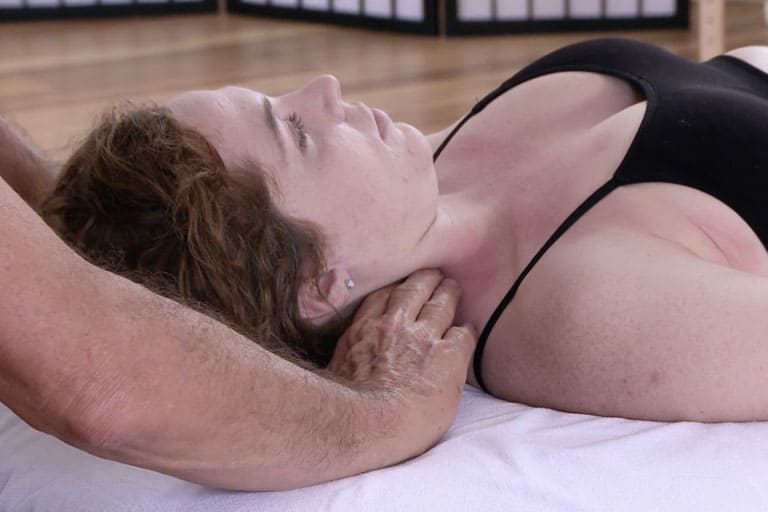
The neck is a remarkable feat of biomechanical engineering, giving a combination of wide range of movement but maintaining a structural strength. It is often seen as the last site of compensation as it corrects for any alteration from below allowing the eyes and ears to orient to the horizon.
Patterns can of course work their way in the other direction and particularly from the jaw and its many possible patterns of movement and holding.
This course will focus on key areas of the neck and jaw complex to allow you to build successful strategies to ease these potential problem areas alleviating the issues working in both directions and setting the body up for a longer lasting change.